By Johnny Korthuis
What does it mean to truly develop your people?
Many outfits take a formal training approach, where an outside instructor, owner, or lead hand delivers standardized training from an established curriculum. This is, of course, extremely important and is how your people get introduced to industry standards, standard operating procedures (SOPs), techniques, and protocol.
But without repetition and reinforcement, much of what gets taught can tend to atrophy. Real long-term development happens when those lessons are carried into the field and reinforced over time with purpose and structure. That is where on-the-job (OTJ) mentorship comes in.
When I say OTJ mentorship, I am not talking about just throwing a new or developing worker beside your strongest climber or operator and hoping something rubs off. I am talking about a deliberate process: paying attention to how your people learn, respond under pressure, and what kind of responsibility they are ready for, and then using key people, either external or internal to your company, to build them up gradually without either handholding or overloading them.
For contracted trainers wishing to assist a company with this process, this could look like helping management identify who is ready to grow and what kind of coaching they actually need. For employers, crew leads, and supervisors, it means understanding that mentorship can take place alongside production and is part of how stronger crews get built.
Now, it is important to recognize that not everyone needs the same approach. Some people want to jump in right away. Some want to watch first, understand the “why,” then try it with supervision. Some need repetition to build confidence. Some ask a lot of questions, while others stay quiet and need to be drawn out. You do not need a complicated personality test to get a sense of this. You just need to pay attention.
A loud person is not always the future leader. The quiet one is not always disengaged. The fast learner is not always the safest one. And the person who struggles early may turn into the most reliable worker on the crew once the material clicks and the pressure drops. Good mentorship means looking past first impressions and paying attention to how a person processes information, handles correction, communicates with others, and carries responsibility.
For me, one of the clearest signs of a person’s readiness to progress is not confidence alone. It is awareness. Does the person notice what is happening around them? Do they pick up on changing conditions? Do they think about the crew as whole, not just themselves? Do they ask better questions over time? Do they start anticipating the next step instead of waiting to be told? These are key indicators of who is worth investing in.
Once you identify readiness, the next step is not simply handing them a title. It is gradually increasing responsibility within a chosen arena in a controlled way and building accountability alongside it. This is where the mentorship process is delicate. Give someone too little responsibility and they stall out. Give them too much too soon and you create stress, mistakes, and sometimes resentment from the rest of the crew. A better model is to build people up gradually, one task or skill at a time.
In adult education, this often follows a simple pattern:
- Communicate with the learner what you want them to work on.
- Demonstrate the task.
- Guide the learner through its execution.
- Support them as they take on more of it themselves.
- Step back as they become capable and independent.
When developing “leadership,” an approach could look like the following: first having a newer worker explain the job plan back to you in their own words. Then they take on equipment checks. Later, they lead part of the tailboard. Then they manage a defined task with supervision. After that, they might coordinate part of the workflow, set up the work site, or mentor the next new worker through those same steps. Eventually, if they show sound judgment, they can make decisions within defined limits. That progression matters. Leadership is rarely built in one big moment, but rather through manageable, predictable reps.
The same goes for technical skills. An effective mentor does not just dump information with a quick demo and move on. They explain the reasoning behind the method, let the learner try it, and then give feedback while the experience is fresh.
Adult learners usually respond best when they understand why something matters, can connect it to real consequences, and have some ownership in the process instead of just being passive receivers.
As mentioned above, for contracted trainers, some of the best value you offer is not just skill instruction. It is helping a company see the people in front of them more clearly. For example: Who learns best by watching? Who learns by doing? Who needs more context before they commit? Who gets overloaded quickly? Who has leadership potential but lacks confidence? Who has confidence but lacks maturity? Those observations can help a company get more value from your training long after the course, and can also help them plot paths forward for their people after you’ve left.
For employers and crew leads, be cautious with waiting until someone appears “fully ready” to progress before you start developing them. Like technical skills or leadership ability, readiness is not uniform across all the skill sets our industry demands. It grows when people are given the right amount of relevant challenge support and can demonstrate accountability.
Also important to note, successful, witnessed mentorship creates a culture where learning is normal. People ask questions earlier, mistakes get caught sooner, and crew members start helping each other more effectively. Over time, the whole team becomes more stable and capable because their development is self-sustaining, ongoing, and occurring with intention instead of being left to chance. The collective tide rises.
At the end of the day, effective mentorship is not passive. It is an investment of time and resources, should be approached with intention and strategy, and is one of the most practical things a company can do for its people. It helps build safer workers, stronger crews, and future leaders. In an industry where good people are hard to find and even harder to keep, this is paramount.
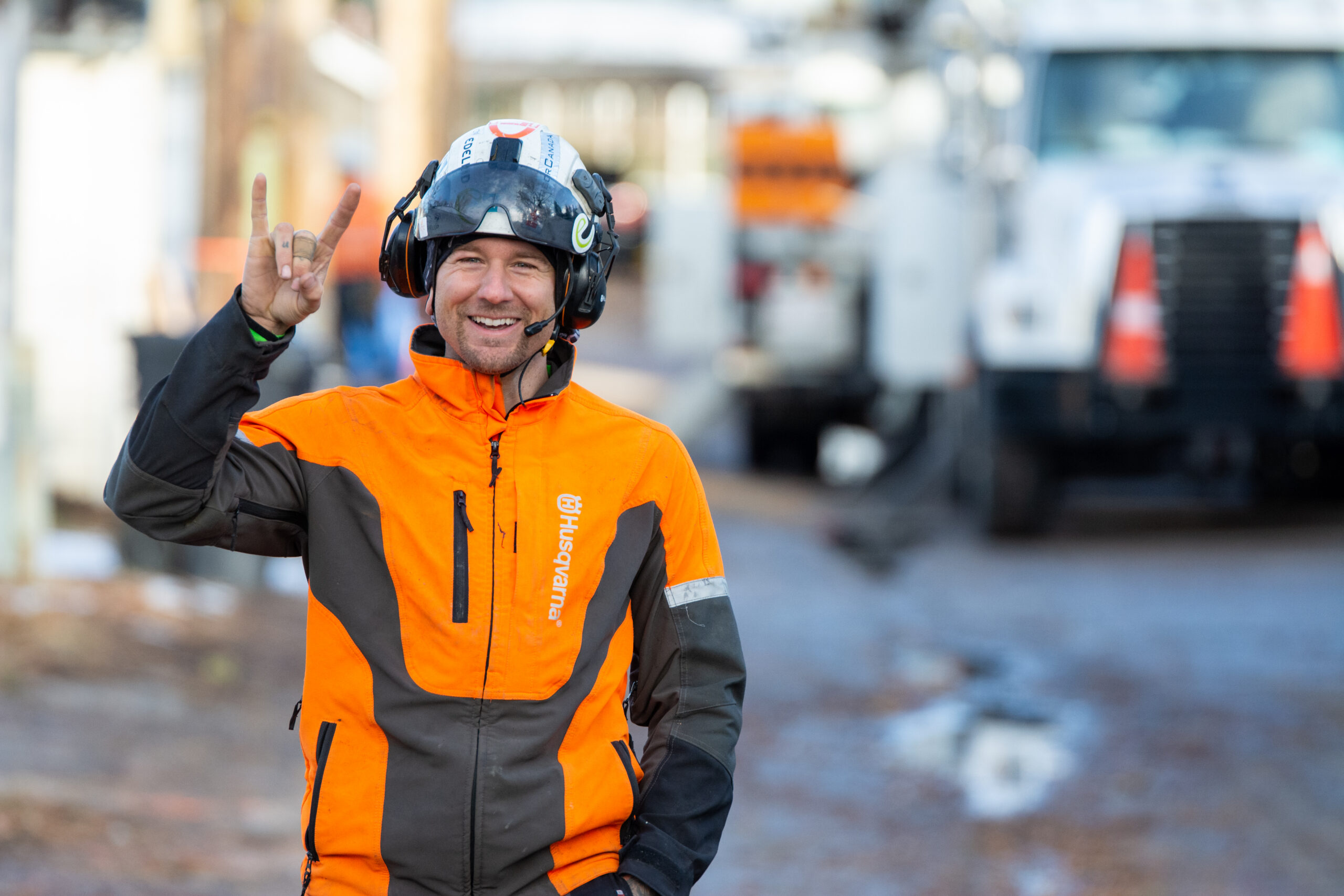
Johnny Korthuis, PR-4876A, is part of the global Husqvarna H-Team member, fellow student, trainer, business owner, and passionate arborist of 25 short years.
This blog post was provided by Husqvarna, a corporate member and TCIA gold sponsor.