
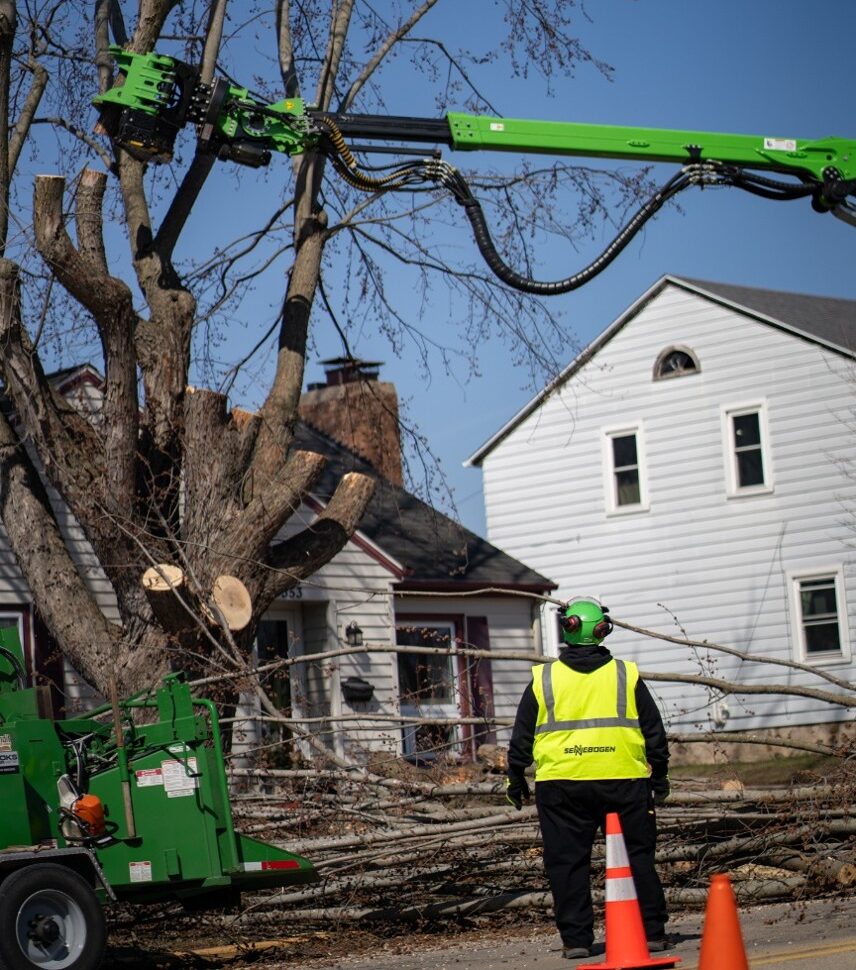
As mechanized equipment continues to gain traction across the tree care industry, companies are facing an important operational question: how do you effectively train operators on increasingly specialized equipment while maintaining safety, efficiency, and consistency?
Over the last decade, mechanized tree handling equipment has evolved from a niche solution into a more widely accepted tool for storm response, roadside work, commercial removals, and even select residential applications. Along with that growth has come a new challenge for employers: developing structured operator training programs that help teams safely adapt to advanced machinery and cutting systems.
Unlike many traditional training environments, tree care presents a unique obstacle — the work itself is not endlessly repeatable. Once a tree is removed, the training opportunity is gone. At the same time, active job sites are often not ideal environments for inexperienced operators due to production demands, property concerns, and elevated safety risks.
As a result, many companies are beginning to rethink what effective operator development looks like in a mechanized environment.
Building a Strong Operator Development Program
Across industries, effective equipment training programs tend to share several common characteristics:
- Safe and controlled learning environments
- Repeatable exercises and scenarios
- Tiered skill progression for new operators
- Opportunities for both classroom and hands-on learning
- Exposure to troubleshooting and real-world operating conditions
In mechanized tree care specifically, operators must develop an understanding not only of machine controls, but also of cutting dynamics, load positioning, visibility, hydraulic systems, and jobsite awareness.
For example, fixed grapple saw systems operate differently than dangle-head or crane-based systems. Operators must learn concepts like proper cut alignment, load control, and how to prevent saw pinching — all skills that improve with guided repetition and seat time.
According to John Ventura, lead technical trainer for SENNEBOGEN, “In-person training brings specific testing and troubleshooting of the systems that are on our machines to aid technicians in their future interactions with the machine, whether it’s just servicing or system repair.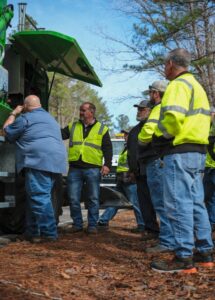
The Role of Simulation in Equipment Training
One growing trend in operator development is the use of simulators as an early-stage training tool.
Simulation allows new operators to become familiar with controls, cutting movements, and machine behavior before entering a live production environment. It also provides employers with a low-risk way to evaluate aptitude and comfort level before advancing trainees into field operations.
For many companies, simulation can help bridge the gap between classroom education and real-world operating experience.
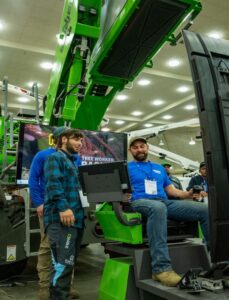
Jordan Tielmann of Noble Oak Safety & Training explains, “Integrating the SENNEBOGEN 718 Simulator into our operator development program has completely advanced the training experience. It gives operators the opportunity to build confidence, develop muscle memory, and safely work through real-world scenarios before ever stepping foot into the cab.”
Simulation alone, however, is rarely enough. Most successful programs combine multiple layers of education, including:
- Classroom instruction
- Machine familiarization
- Maintenance and troubleshooting education
- Controlled field exercises
- Evaluated competency testing
Creating Scalable Training Pathways
As mechanization becomes more common, companies may also need to think beyond informal “ride along” training methods and toward more documented, scalable development pathways.
That may include:
- Internal operator progression standards
- Written competency benchmarks
- Refresher training schedules
- Third-party evaluations or certifications
- Dedicated training environments outside of active job sites
Some manufacturers and training organizations have begun expanding offerings to support these needs through technical workshops, simulator programs, and hands-on operator development courses.
The broader takeaway for the industry is clear: adopting advanced equipment successfully requires investing not just in machinery, but also in structured operator education.
Mechanized tree care equipment continues to evolve rapidly. Ensuring operators can safely, confidently, and efficiently use those tools will remain one of the industry’s most important long-term priorities.
 This blog post was provided by Sennebogen, a corporate member and TCIA gold sponsor.
 Call for Presentations: Share Your Expertise at TCI EXPO 2026!